The method
How we
photograph.
A product photograph is an argument about what a garment is like. This page sets out the conditions ours are taken in, so you can judge how much weight to give them.
Last updated 11 August 2026
One
The backlight rig
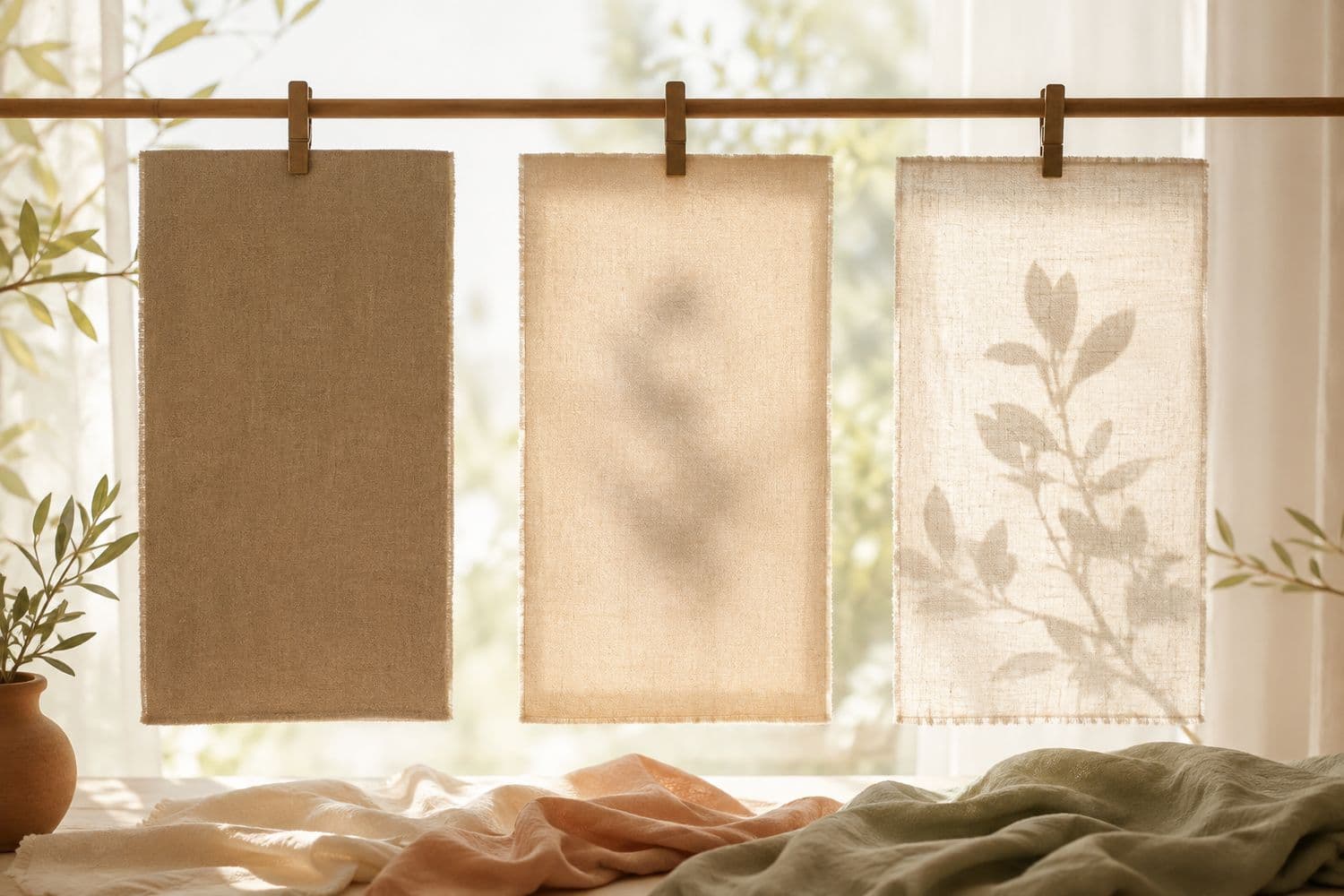
Every garment we sell is photographed twice: once in ordinary diffused daylight, and once on a fixed backlight rig. The second photograph is the one that decides the opacity grade.
The conditions, which do not vary
- A single continuous LED panel at 5600 K, run at 4000 lux measured at the cloth.
- The panel sits 90 cm directly behind the garment, centred on it, with no light in front except a low fill at 300 lux so the front of the cloth is not black.
- A matte neutral-grey card sits 15 cm behind the front layer of the garment, between the cloth and the panel. That card is what you are seeing the outline of.
- The camera is on a tripod at the garment’s mid-height, 2.5 m away. Exposure is locked across every shoot: f/8, 1/125, ISO 200.
- The frame is not retouched for translucency. Dust and thread ends are removed; nothing that affects how much light passes through is touched.
How the three grades are decided
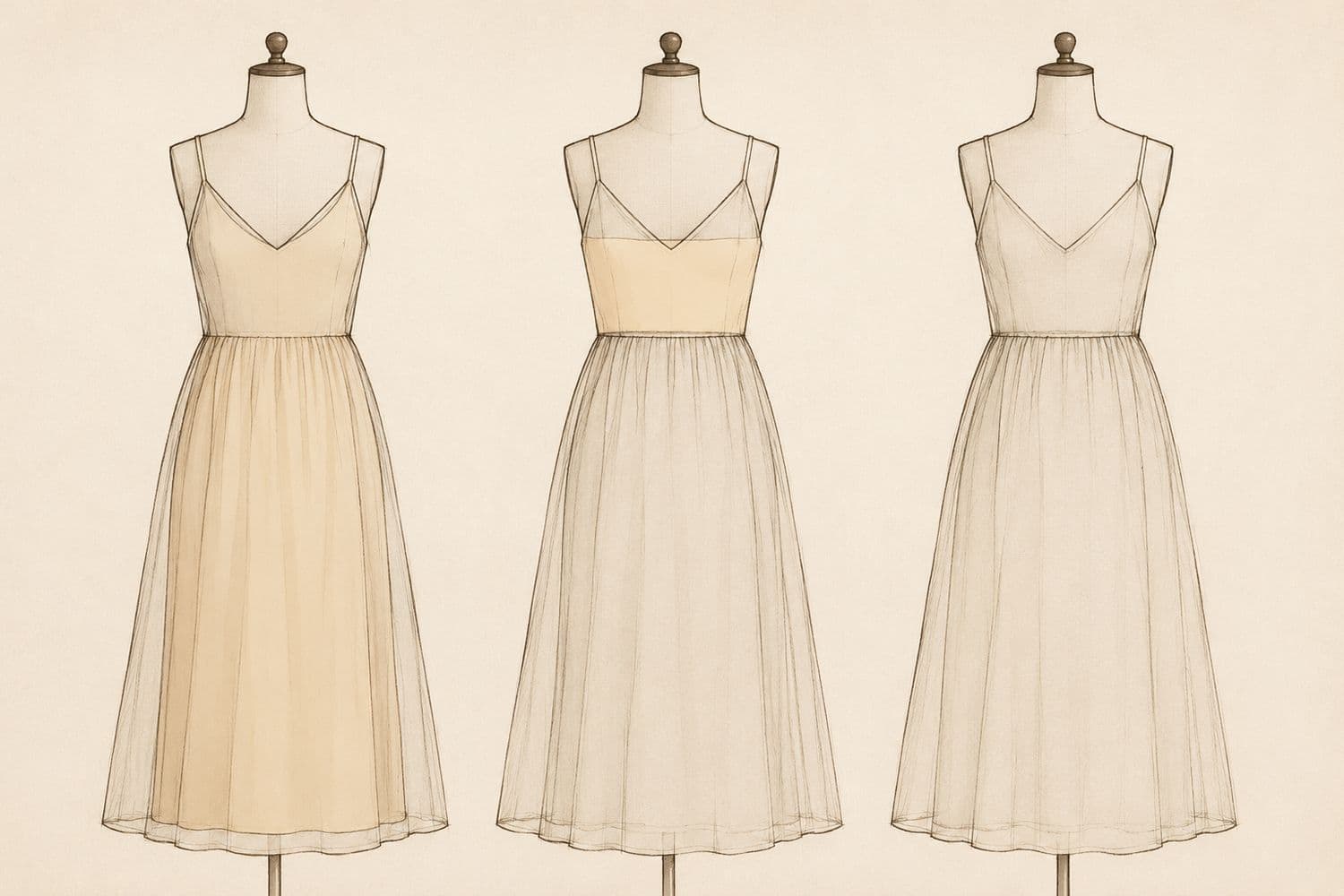
- Opaque — the edge of the grey card behind the cloth cannot be located in the frame.
- Semi-sheer — the edge of the card can be located but is soft.
- Sheer — the edge of the card is crisp and readable.
Where a garment has more than one weight of cloth in it — a lined body and an unlined sleeve, say — we grade to the most transparent part and say so on the page, rather than averaging it into a flattering number.
What this cannot tell you
A rig is a controlled condition and the world is not. Direct low sun is far stronger than 4000 lux and will show more than our photograph does. A dim restaurant will show less. This is why we grade in three broad steps instead of publishing a percentage that would imply a precision we do not have, and it is why we never claim that a garment blocks light completely.
Two
Seated length
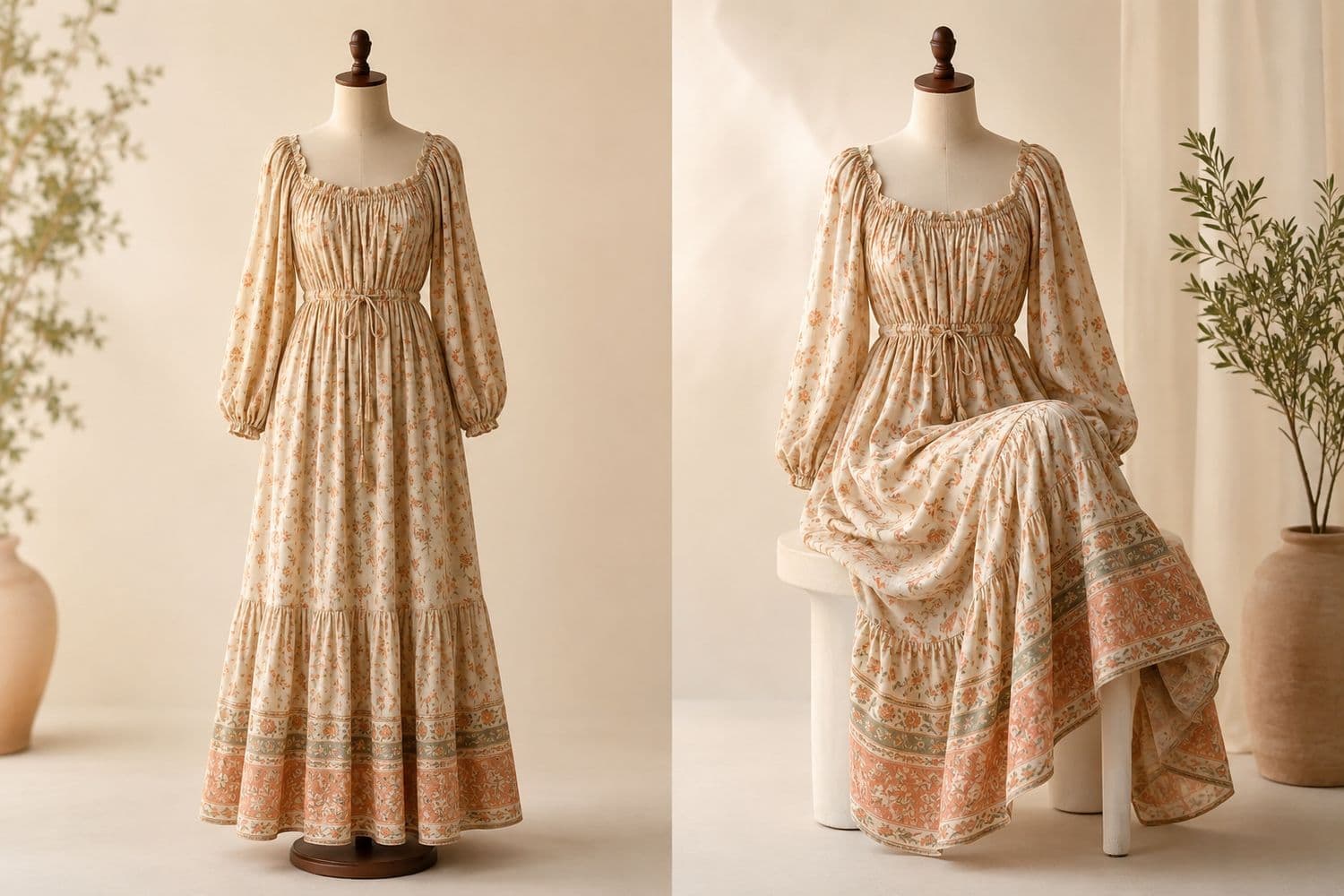
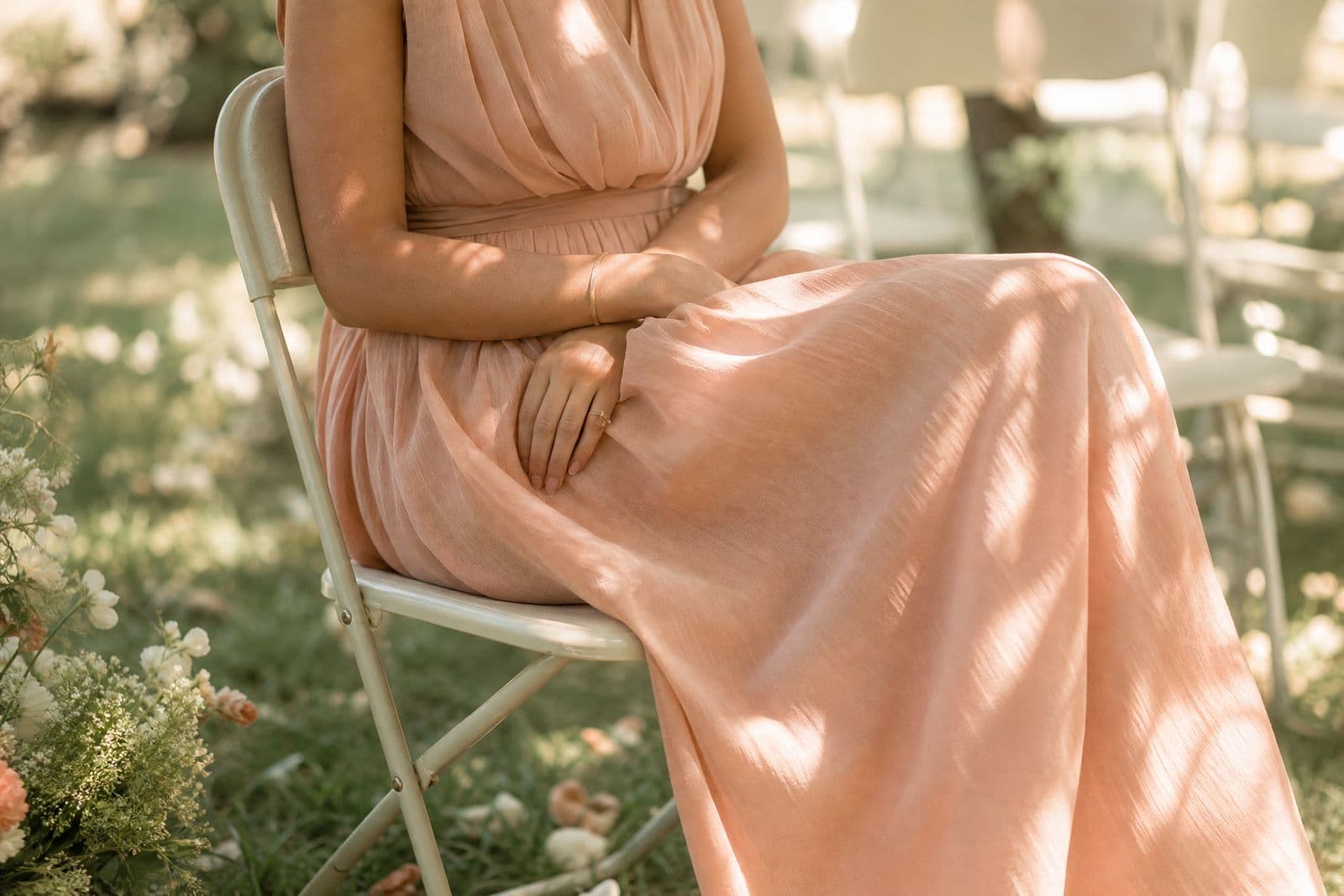
Product photographs are taken standing. Ceremonies, dinners and long lunches are attended sitting. The difference between those two hem positions is the single most common surprise in a dress, and it is trivially measurable, so we measure it.
The method
- The garment is fitted to an articulated form set to the base size, US 6.
- The form is posed on a 45 cm high seat with the thigh horizontal and the knee at 90°, which is a normal dining or ceremony chair.
- The skirt is allowed to fall naturally. It is not arranged, smoothed or pulled down for the photograph.
- We then measure from the top of the kneecap to the front hem. A positive number means the hem is below the knee; a negative number means it is above.
- The published figure is for the base size. Each size up adds the length grade shown in that garment’s size table.
For a garment with a slit, a wrap front or a button-through skirt, the seated figure is taken with the opening in the position it naturally falls into when seated — which is usually open. We say so on those pages.
Three
The three wind steps
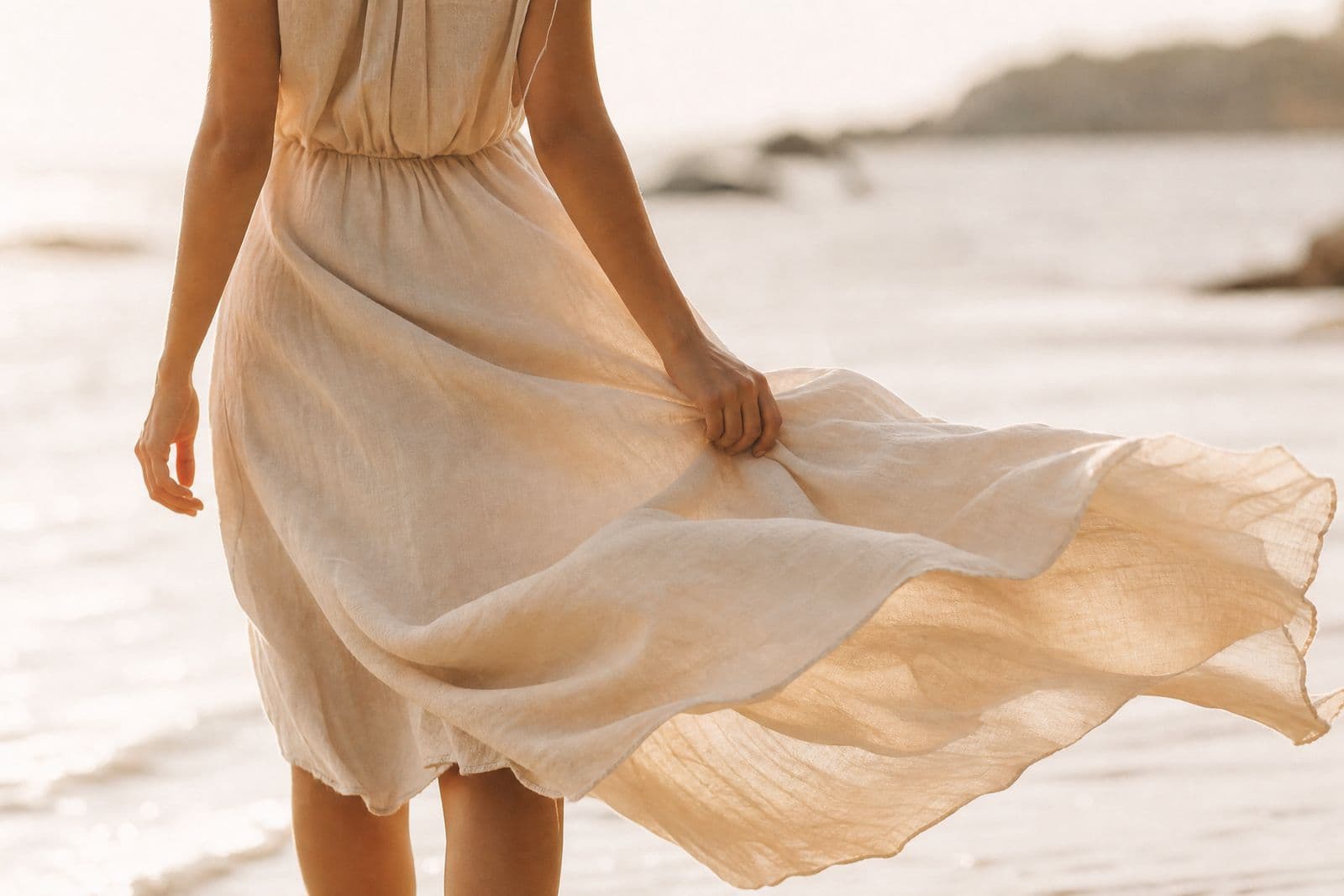
“Light”, “moderate” and “heavy” describe how a hem behaves when air moves across it. They are a description of the cloth, not a forecast and not a promise.
The test
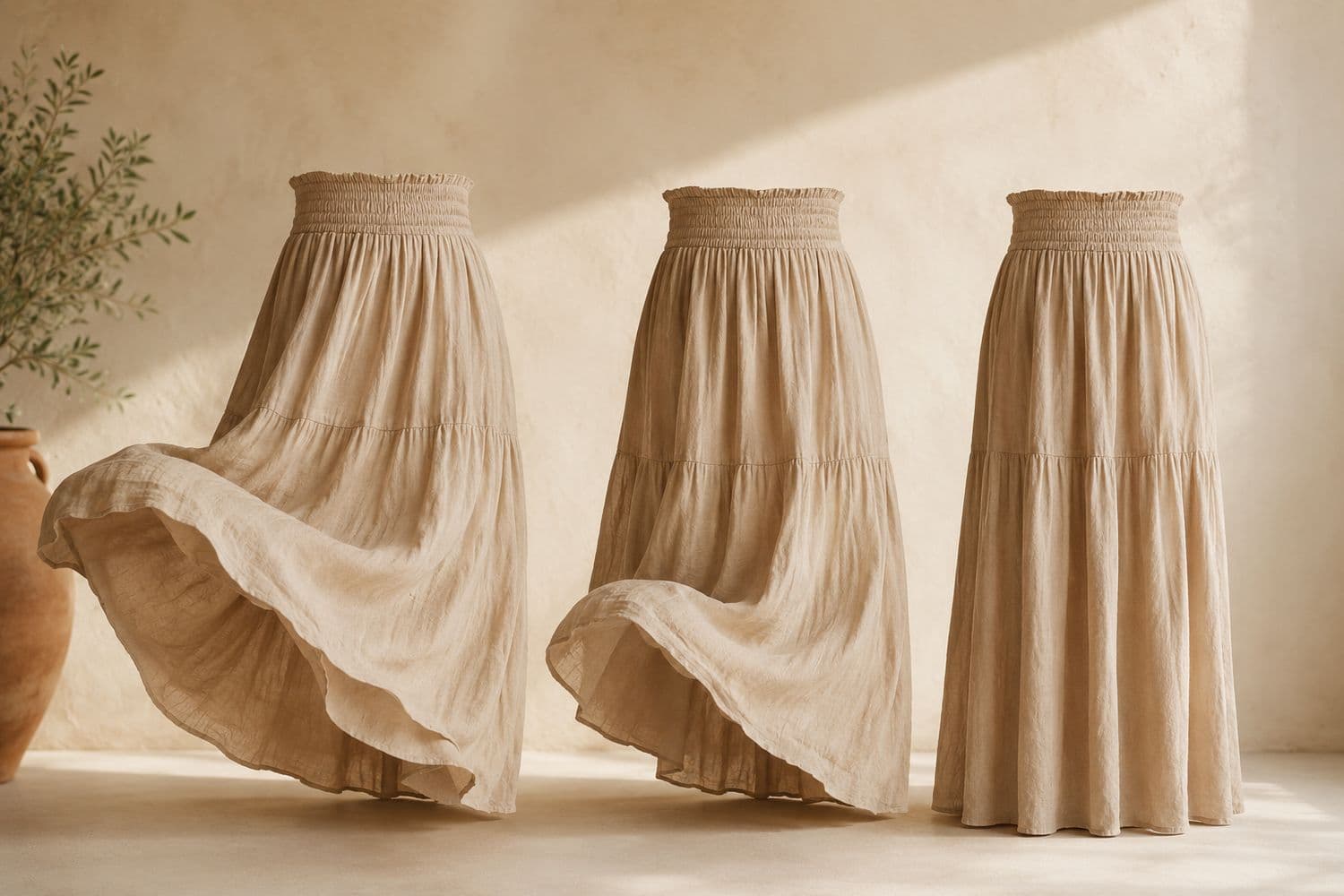
The garment hangs on a form. A fan set at 4 metres per second — roughly a steady coastal breeze — is placed 2 m away at hem height and run for 20 seconds. We record the maximum hem lift from rest, measured at the front centre.
- Light — the hem lifts more than 40 cm. It will need a hand on an exposed walkway.
- Moderate — the hem lifts 15 to 40 cm and returns quickly when the air stops.
- Heavy — the hem lifts less than 15 cm. The cloth hangs against the air rather than floating on it.
This is a repeatable laboratory condition. Real wind gusts, changes direction and comes off the sea in a way a fan does not. Choosing a heavy hem improves your odds; it does not settle the matter, and we do not claim that any hem stays down.
Four
Colour on a screen
Every garment is shot under the same 5600 K light against a neutral card, and the files are corrected to that card rather than to taste. That is as far as our control goes. After the file leaves us it passes through your display, your operating system’s colour profile, your brightness setting and whatever light is in your room.
Where the gap is widest
- Pale neutrals. Bisque, chalk, bone and ivory are close together in reality and closer still on a screen. If the difference between two of our creams matters for your event, email us and we will describe them against something you already own.
- Saturated corals and terracottas. These often sit outside what a standard sRGB display can show, so the screen renders the nearest colour it can. In person they are usually warmer and less electric.
- Deep cocoa and ink. On a bright phone these read closer to black than they are.
A colour that is not what you expected is treated as an ordinary change-of-mind return under the returns policy, and it is one of the more common reasons people return something. We would rather answer an email first.
Five
Models, and whether we use clips
Every garment page lists two model profiles, not one: height, bust, waist and hip in centimetres, and the size each was wearing in the shoot. One model tells you almost nothing; two lets you interpolate.
Clips
It is standard practice in apparel photography to clip a garment at the back so it reads closer to the body than it is. It is also the reason a dress can look nothing like its photograph.
We do not clip, pin or tape any garment in a product photograph. Every product frame shows the garment at the size stated, hanging as it hangs. If we ever needed to adjust a garment for a shot, we would say so on that garment’s page in the same type size as everything else.
The rest of it
- Product frames are shot on a form or laid flat, with no person inside them, so the cut is legible.
- Location frames are composed from the shoulders down. We are selling cloth, not a face.
- Retouching is limited to dust, lint and thread ends. Silhouette, drape, translucency and colour are not altered.
- Nothing on this site is generated to imply a fit or a fabric behaviour the garment does not have.
Six
Claims we do not make
There is a standard vocabulary in womenswear that describes bodies rather than clothes. We do not use it, anywhere on this website, and the rule is enforced in the code rather than left to good intentions: a list of banned phrases is checked against every product description, every finder result and every published review when the site is built. A single match stops the build and the page never ships.
What that list covers:
- No claims about your body. We will not tell you a dress is slimming, that it flatters a figure, or that it conceals anything. A garment has measurements. What it does on a person is not ours to characterise.
- No universal sizing. Nothing here fits everyone. Where a piece is one size, we publish the circumference range it actually fits.
- No universal occasions. Nothing is right for every occasion. Dolcemia lists specific occasions and defers to the invitation.
- No absolute opacity. Nothing is described as completely opaque or guaranteed not to be see-through.
- No absolute wind behaviour. No hem is described as one that will not lift.
- No absolute fabric behaviour. Nothing is wrinkle-free or stain-proof, and a piece that requires dry cleaning is never described as easy care.
You can see the practical result of this on any product page: the fabric notes list what a cloth does badly as plainly as the description lists what it does well.